
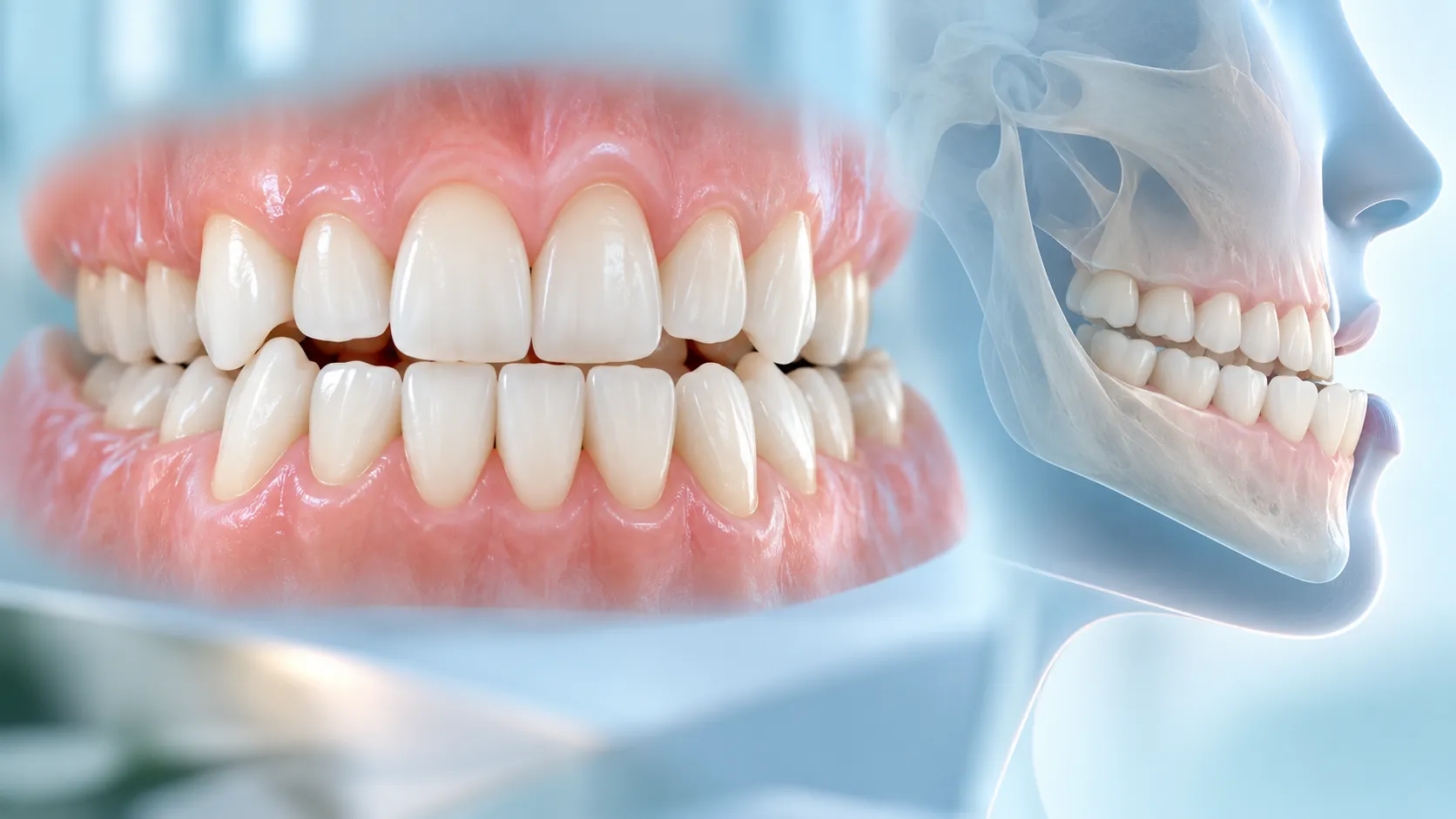
What Are Crossbites and Underbites?
Both are bite problems where the upper and lower teeth don’t meet the way they should. With an underbite, the lower front teeth sit in front of the upper front teeth when you bite down. With a crossbite, one or more upper teeth sit inside the lower teeth instead of slightly outside them. A crossbite can affect the front teeth, the back teeth or both.
These bite issues are very treatable, and they’re often easiest to correct when they’re caught while a child is still growing. Here’s what to look for and how our Lake Worth orthodontists can help.
At a Glance
- Underbite: The lower front teeth sit in front of the upper front teeth.
- Crossbite: Some upper teeth sit inside the lower teeth, in the front, the back or both.
- Common causes: Genetics, jaw growth, early loss of baby teeth or childhood habits.
- When to check: A first orthodontic visit by age 7.
- Treatment: Expanders, growth-guiding appliances, braces or Invisalign, depending on the patient.
Crossbite vs. Underbite: What’s the Difference?
Underbite
In a healthy bite, the upper front teeth slightly overlap the lower front teeth. With an underbite, it’s the other way around. The lower jaw may look like it juts forward. Underbites are often caused by genetics, the way the jaws grow, or an injury to the jaw.
Crossbite
A crossbite can show up in two places:
- Front (anterior) crossbite: One or more upper front teeth sit behind the lower front teeth. This can look like an underbite, but it may involve just a tooth or two.
- Back (posterior) crossbite: The upper back teeth sit inside the lower back teeth on one or both sides. This is often linked to a narrow upper jaw.
Crossbites can be caused by genetics, a narrow upper jaw, baby teeth that come out too early or too late, or long-term habits like thumb-sucking.
Signs to Watch For
Some bite problems are easy to spot, while others are subtle. Look for:
- Lower front teeth that sit in front of the upper teeth when your child bites down
- A lower jaw that looks pushed forward
- Back teeth that don’t line up evenly on one or both sides
- A jaw that shifts to one side when the mouth closes
- Uneven wear or chipping on certain teeth
- Trouble biting into or chewing food
- Jaw discomfort or clicking
Pro Tip: Ask your child to smile and bite down gently in front of a mirror. If the bottom front teeth sit in front of the top teeth, or the jaw slides to one side, it’s worth having our orthodontists take a look.
Adults can have these bite problems too. If you’ve noticed uneven tooth wear or jaw discomfort, treatment is still an option.
Why Early Treatment Matters
Crossbites and underbites usually don’t correct on their own. Left untreated, they can lead to uneven tooth wear, gum problems, jaw strain and an uneven bite that’s harder to fix later.
Because a child’s jaw is still growing, early treatment gives our orthodontists more ways to guide it into a healthy position. That’s why we recommend a first checkup by age 7. Learn more in our post on early orthodontic treatment.
How We Treat Crossbites and Underbites
Your treatment plan depends on your age, how your jaw is growing and which teeth are involved. Options may include:
- Palatal expander: Gently widens a narrow upper jaw. This is a common way to correct back crossbites in growing children.
- Growth-guiding appliances: Help encourage healthy jaw growth while a child is still developing.
- Braces or Invisalign: Move individual teeth into the right position and fine-tune the bite. They’re often used after or alongside an appliance. The choice comes down to lifestyle, and at Cooper Orthodontics both cost the same.
- Retainers: Keep the corrected bite in place after treatment.
You can see more about these tools on our Orthodontic Appliances page.
FAQs
Will my child grow out of an underbite or crossbite?
Usually not. These bite problems tend to stay the same or become more noticeable as a child grows. An early checkup helps us decide whether to treat now or keep watching.
Can Invisalign fix a crossbite or underbite?
In many cases, yes. Invisalign can correct many bite issues, sometimes alongside other appliances. Our orthodontists will explain which options fit your bite and lifestyle at your free consultation.
Can adults fix an underbite or crossbite?
Yes. Adults can correct these bite problems too. Because an adult’s jaw has finished growing, the plan may look different than it would for a child, and our orthodontists will walk you through every option.
Get Your Bite Checked in Lake Worth
Noticed signs of a crossbite or underbite? Our family orthodontists will take a look and explain your options, whether it’s for your child or for you.
Cooper Orthodontics – Lake Worth
1718 North Federal Highway, Lake Worth, FL 33460
(561) 270-0209
Book your free consultation today!
THE PATIENT AND ANY OTHER PERSON RESPONSIBLE FOR PAYMENT HAS A RIGHT TO REFUSE TO PAY, CANCEL PAYMENT, OR BE REIMBURSED FOR PAYMENT FOR ANY OTHER SERVICE, EXAMINATION, OR TREATMENT THAT IS PERFORMED AS A RESULT OF AND WITHIN 72 HOURS OF RESPONDING TO THE ADVERTISEMENT FOR THE FREE, DISCOUNTED FEE, OR REDUCED FEE SERVICE, EXAMINATION, OR TREATMENT.