
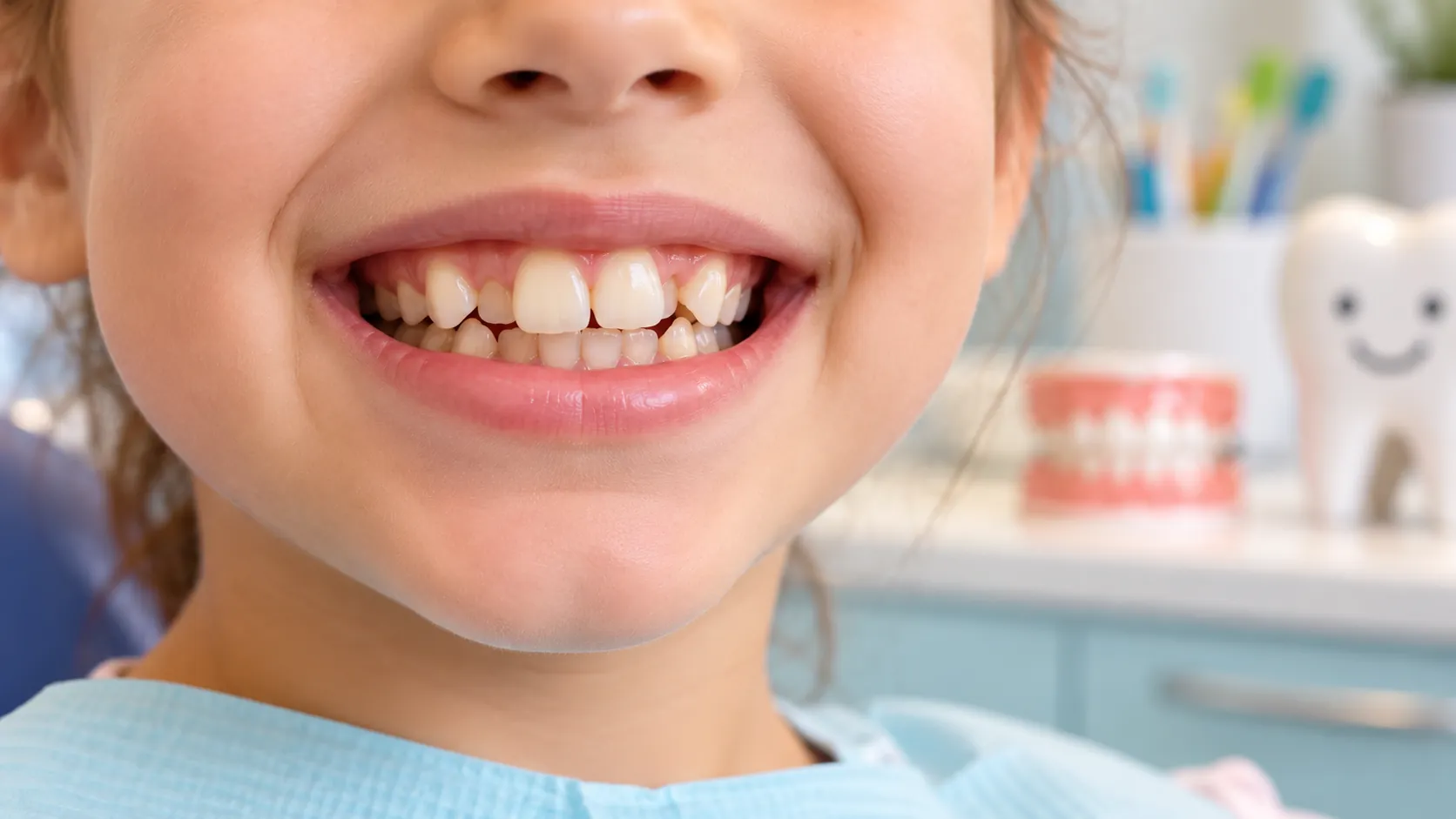
What Does It Mean When a Child Has Crowded Teeth?
Crowded teeth happen when there isn’t enough room in the mouth for all of the permanent teeth to fit. The teeth may overlap, twist or push forward or backward as they come in. The good news is that crowding is one of the most common orthodontic issues, and it’s often easier to address when it’s caught early.
The American Association of Orthodontists recommends a first orthodontic checkup by age 7. If you’ve noticed your child’s new teeth coming in crooked, here’s what parents in Royal Palm Beach should know.
At a Glance
- What it is: Not enough room in the mouth for all the permanent teeth.
- Common signs: Overlapping or twisted teeth, or adult teeth coming in behind baby teeth.
- When to check: A first orthodontic visit by age 7.
- Treatment options: Monitoring, a palatal expander, braces or Invisalign, depending on your child’s needs.
- First step: A free consultation with our orthodontists.
What Causes Crowded Teeth?
Crowding usually comes down to space. Common causes include:
- Jaw size: A small or narrow jaw may not have room for every permanent tooth.
- Tooth size: Larger permanent teeth can crowd a typical-sized jaw.
- Genetics: Crowding often runs in families.
- Early loss of baby teeth: When a baby tooth comes out too soon, nearby teeth can drift into the empty space and block the permanent tooth.
- Childhood habits: Long-term thumb-sucking or pacifier use can affect how the teeth and jaw develop.
Signs Parents Can Spot
You don’t need to be an expert to notice early signs of crowding. Watch for:
- Permanent teeth coming in crooked, twisted or overlapping
- Adult teeth growing in behind baby teeth that haven’t fallen out yet
- Teeth that look jammed together, with no visible space between them
- Difficulty brushing or flossing between certain teeth
- Food that often gets stuck in the same spots
Pro Tip: Snap a smile photo every few months as your child’s adult teeth come in. It’s an easy way to notice changes and share them with our team.
Why Treat Crowded Teeth?
Crowding isn’t just about looks. Straightening crowded teeth can help your child:
- Keep teeth cleaner. Overlapping teeth are harder to brush and floss, which can raise the risk of cavities and gum problems.
- Avoid uneven wear. Teeth that don’t line up well can rub against each other in ways they shouldn’t.
- Bite and chew comfortably. Well-aligned teeth help the bite come together the way it should.
- Feel confident. A healthy, straight smile can make a big difference for kids and teens.
Catching crowding while your child is still growing also gives our orthodontists more ways to help, because the jaw can be guided while it’s developing.
How We Treat Crowded Teeth in Kids
Every child is different, so our orthodontists build a plan around your child’s age, growth and needs. Options may include:
Watching and Waiting
Some children don’t need treatment right away. If more of their adult teeth still need to come in, we may simply keep an eye on how things develop with regular checkups.
Palatal Expander
When the upper jaw is too narrow, a palatal expander can gently widen it to make room for the permanent teeth. Expanders work best while a child’s jaw is still growing, which is one reason early checkups matter. You can learn more on our Orthodontic Appliances page.
Braces or Invisalign
Braces or Invisalign can straighten crowded teeth once enough permanent teeth are in, and they’re sometimes used alongside an expander. The choice often comes down to your child’s lifestyle. Braces are a good fit for kids who’d rather not keep track of removable aligners, while Invisalign suits responsible kids and teens who want a discreet, removable option. At Cooper Orthodontics, both cost the same.
Retainers
After treatment, a retainer keeps teeth from shifting back into a crowded position.
FAQs
Will my child’s crowded teeth fix themselves?
Usually not. Some spacing changes as baby teeth fall out, but true crowding caused by a lack of room typically doesn’t correct on its own. A checkup with our orthodontists can tell you whether it’s something to watch or treat.
Can crowded baby teeth mean crowded adult teeth?
Often, yes. Permanent teeth are larger than baby teeth, so if baby teeth are already tight, the adult teeth may not have enough room when they come in.
How old should my child be for a palatal expander?
Expanders work best while the jaw is still growing, often in younger children who still have some baby teeth. Our orthodontists will let you know whether an expander is right for your child at their free consultation.
Schedule Your Child’s Free Consultation in Royal Palm Beach
Noticed crowding in your child’s smile? Our family orthodontists are happy to take a look and let you know whether it’s time to treat or simply keep watching.
Cooper Orthodontics – Royal Palm Beach
685 Royal Palm Beach Blvd, Suite 202, Royal Palm Beach, FL 33411
(561) 270-0209
Book your free consultation today!
THE PATIENT AND ANY OTHER PERSON RESPONSIBLE FOR PAYMENT HAS A RIGHT TO REFUSE TO PAY, CANCEL PAYMENT, OR BE REIMBURSED FOR PAYMENT FOR ANY OTHER SERVICE, EXAMINATION, OR TREATMENT THAT IS PERFORMED AS A RESULT OF AND WITHIN 72 HOURS OF RESPONDING TO THE ADVERTISEMENT FOR THE FREE, DISCOUNTED FEE, OR REDUCED FEE SERVICE, EXAMINATION, OR TREATMENT.